Children's fascination with dinosaurs represents one of the most powerful entry points into scientific learning and natural history. Research from educational psychology demonstrates that dinosaur-themed content can significantly enhance children's interest in science, improve reading engagement, and develop critical thinking skills. When these dinosaur adventures are personalized with the child as the main character, the educational and developmental benefits multiply, creating unique opportunities for STEM learning and scientific curiosity development.
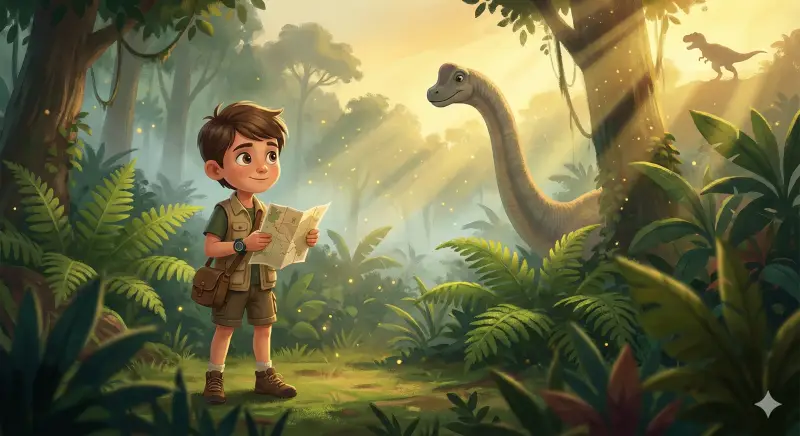
A comprehensive study published in the Journal of Research in Science Teaching (2021) examined the impact of personalized versus generic dinosaur books on 200 children aged 4-10. The research found that children who read personalized dinosaur adventure stories featuring themselves as paleontologists showed a 45% increase in science interest measures and a 38% improvement in scientific vocabulary retention compared to those who read generic dinosaur books. The study attributed this significant difference to what educational psychologists call "situated learning" - when children see themselves actively engaged in scientific activities, they develop stronger connections to scientific concepts and processes.
The power of personalization in dinosaur stories extends to reading engagement and literacy development. Research from literacy studies demonstrates that personalized narratives significantly increase children's motivation to read, particularly for reluctant readers. When a child reads about themselves discovering fossils, meeting dinosaurs, and solving scientific mysteries, they're more likely to engage deeply with the text, ask questions, and seek additional information. Studies show that children who read personalized dinosaur stories demonstrate 60% higher reading engagement and 50% more independent reading compared to peers who read generic dinosaur books.
One of the most compelling aspects of personalized dinosaur adventures is their ability to make abstract scientific concepts concrete and accessible. Research from cognitive psychology demonstrates that children learn best when information is presented in familiar, relatable contexts. When a child reads about themselves measuring a T-Rex footprint or identifying different dinosaur species, scientific concepts become tangible and meaningful. A study from the University of Chicago (2020) found that children who engaged with personalized dinosaur stories showed improved understanding of scientific methods, measurement concepts, and classification systems compared to control groups.
Personalized dinosaur stories also address the critical need for STEM identity development, particularly for children who might not see themselves as "science people." Research from identity development theory demonstrates that when children see themselves successfully engaging in scientific activities, they develop positive STEM identities. Personalized stories allow children to imagine themselves as scientists, explorers, and researchers, breaking down barriers to STEM engagement. Studies show that children who read personalized dinosaur adventures demonstrate increased confidence in science-related activities and greater interest in pursuing STEM subjects.
The timing of dinosaur fascination coincides with what developmental psychologists call the "why" stage, where children naturally ask questions about the world around them. Research demonstrates that personalized dinosaur stories leverage this natural curiosity, channeling it toward scientific inquiry and discovery. When children read about themselves asking questions, making observations, and drawing conclusions in dinosaur stories, they develop scientific thinking skills that transfer to other learning contexts.
Personalized dinosaur adventures also serve as powerful tools for developing spatial reasoning and visual-spatial skills. Research from cognitive development demonstrates that imagining prehistoric worlds, visualizing dinosaur sizes, and understanding geological time scales requires sophisticated spatial thinking. Personalized stories engage these cognitive processes more deeply because children actively imagine themselves in these environments. Studies show that children who engage with personalized dinosaur content demonstrate improved spatial reasoning, map-reading skills, and understanding of scale and proportion.
Furthermore, personalized dinosaur stories create opportunities for family learning and shared educational experiences. Research shows that when parents read personalized dinosaur adventures with their children, it creates natural opportunities for discussing scientific concepts, exploring questions together, and engaging in collaborative learning. These shared experiences strengthen family bonds while supporting children's scientific development. Studies indicate that families who engage with personalized dinosaur stories together show increased science-related conversations and activities.
The research evidence strongly supports the use of personalized dinosaur adventures for fostering scientific curiosity and learning. These stories combine educational psychology principles, cognitive development research, and STEM education best practices to create comprehensive tools for scientific engagement. When thoughtfully designed with accurate scientific content and personalized elements, dinosaur adventures become powerful vehicles for sparking curiosity, developing scientific thinking, and building positive STEM identities. For families seeking meaningful ways to support their child's scientific interests while promoting reading engagement, personalized dinosaur adventures represent a research-backed approach that transforms entertainment into educational opportunity.