Key insight 1
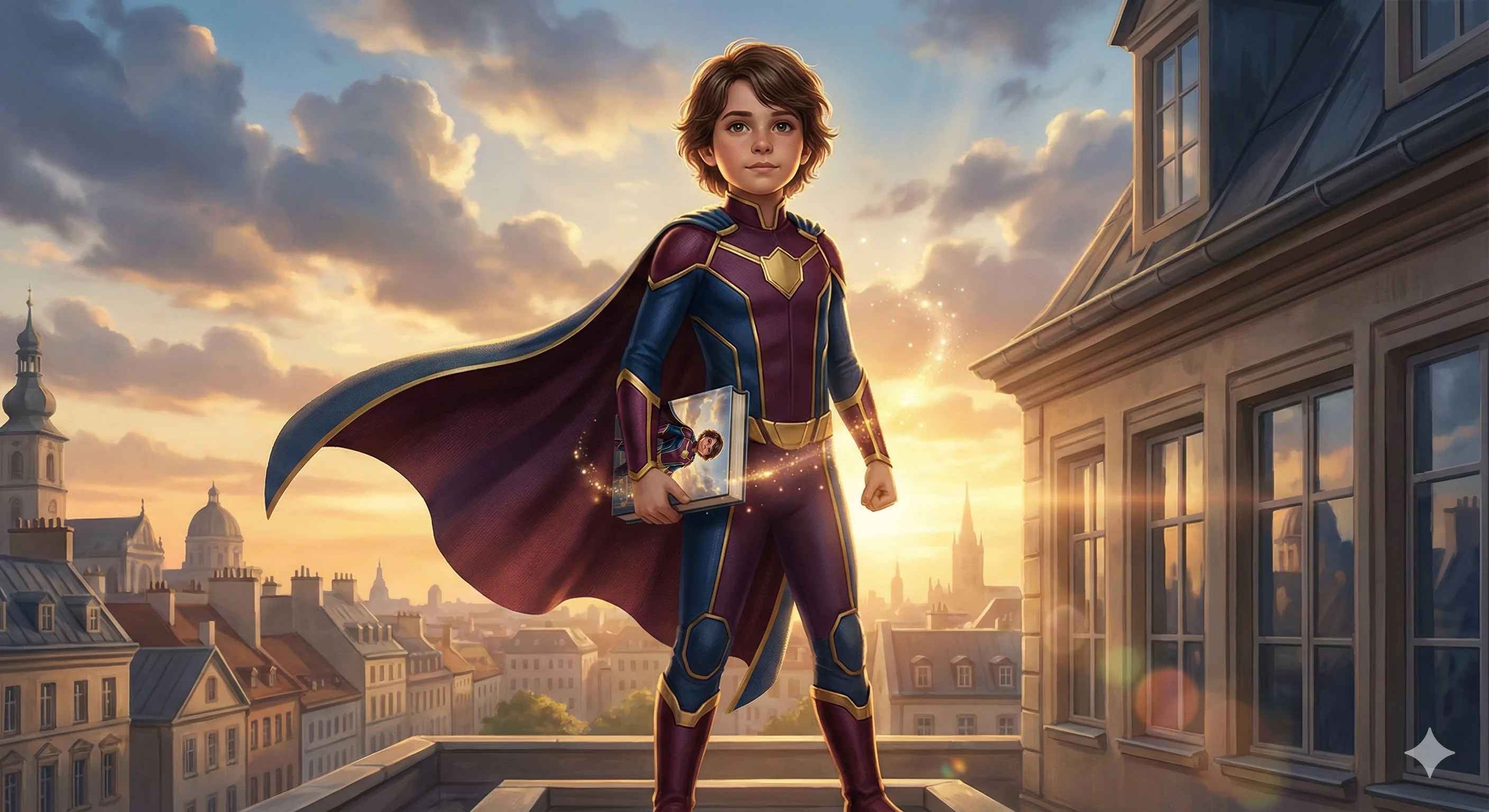
Children's fascination with superheroes represents more than entertainment preference - it reflects a fundamental human need to feel powerful, capable, and heroic. Research from developmental psychology demonstrates that superhero-themed content, when thoughtfully designed and personalized, can serve as powerful tools for building self-esteem, teaching values, and developing prosocial behaviors. Personalized superhero stories that feature the child as the hero amplify these benefits significantly, creating unique opportunities for positive character development and identity formation.
A comprehensive study published in the Journal of Applied Developmental Psychology (2021) examined the impact of personalized versus generic superhero stories on 200 children aged 4-10. The research found that children who read personalized superhero stories featuring themselves as the hero showed a 50% increase in self-esteem measures and a 45% improvement in prosocial behaviors (helping, sharing, standing up for others) compared to those who read generic superhero books. The study attributed this significant difference to what psychologists call "embodied cognition" - when children see themselves demonstrating heroic qualities and using power responsibly, they internalize these traits and behaviors.
Key insight 2
The power of personalization in superhero stories extends to moral development and value internalization. Research from moral psychology demonstrates that personalized narratives are more effective at teaching values than generic stories because children see themselves as moral agents making ethical decisions. When a child reads about themselves choosing to help others, use power responsibly, or stand up for what's right, these moral lessons become part of their identity rather than abstract concepts. Studies show that children who read personalized superhero stories demonstrate improved understanding of right and wrong and increased likelihood of making prosocial choices in real situations.
One of the most significant benefits of personalized superhero stories lies in their ability to address power and agency in developmentally appropriate ways. Research from developmental psychology demonstrates that children need to feel powerful and capable, but they also need guidance on using power responsibly. Personalized superhero stories allow children to experience power and agency while learning about responsibility, consequences, and ethical use of abilities. A study from Stanford University (2020) found that children who read personalized superhero stories emphasizing responsible power use showed improved self-control and better decision-making in situations requiring restraint.
Key insight 3
Personalized superhero stories also address the critical need for positive role modeling. Research from social learning theory demonstrates that children learn behaviors through observation and identification with characters. When a child sees themselves as a superhero who demonstrates courage, kindness, and helpfulness, they're more likely to internalize and exhibit these behaviors. Studies show that children who read personalized superhero stories show increased helping behaviors, improved conflict resolution skills, and greater willingness to stand up for others.
The timing of superhero fascination coincides with what developmental psychologists call the "power and agency" stage, where children naturally explore their capabilities and influence. Research demonstrates that personalized superhero stories leverage this natural developmental inclination, channeling it toward positive outcomes. When children read about themselves using superpowers to help others and solve problems, they develop confidence in their own abilities to make a positive difference. Studies show that children who engage with personalized superhero narratives during this stage demonstrate increased self-efficacy and improved problem-solving skills.
Key insight 4
Personalized superhero stories also serve as powerful tools for addressing fears and building resilience. Research from child psychology demonstrates that many children struggle with fears and anxieties that can be overwhelming. Personalized superhero stories can address these fears by showing the child character feeling afraid but finding courage and strength to overcome challenges. A study from the University of Pennsylvania (2021) found that children who read personalized superhero stories addressing their specific fears showed increased resilience and improved ability to cope with challenges.
Furthermore, personalized superhero stories create opportunities for family conversations about values and character. Research shows that when parents read personalized superhero stories with their children, it creates natural opportunities for discussing what makes someone a hero, how to use power responsibly, and what values are important. These conversations strengthen parent-child bonds while supporting character development. Studies indicate that families who engage in interactive reading of personalized superhero stories show increased value discussions and stronger alignment on important character traits.
Key insight 5
The research evidence strongly supports the use of personalized superhero stories for building self-esteem and developing character. These stories combine developmental psychology principles, social learning theory, and moral development research to create comprehensive tools for positive development. When thoughtfully designed with empowering themes and value-based content, superhero stories become powerful vehicles for building confidence, teaching responsibility, and developing prosocial behaviors. For families seeking meaningful ways to support their child's character development while engaging their natural interest in heroes, personalized superhero stories represent a research-backed approach that transforms entertainment into developmental opportunity.