Family Development
How Personalized Books Address Common Childhood Fears
By James Smith
Have you ever been sitting with your child, knowing they were experiencing that unique, subtle weight of worry? Not a big, dramatic panic, but the slow, heavy knot of anxiety that seems to live just beneath the surface of play. Maybe it's the fear of the dark, the worry about school, or perhaps the sheer, overwhelming unknown that comes with change.
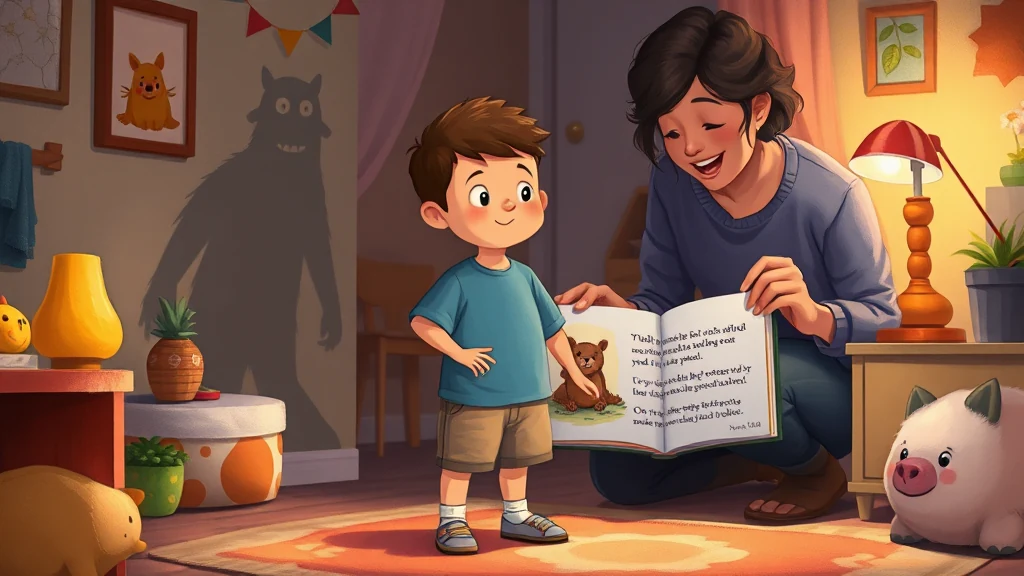
As parents, we hear these anxieties-the whispers about monsters under the bed, the tears before leaving the car, the bedtime questions about why things are different now. The feeling can be physically loud, making us feel like we have to "fix" the worry immediately. But what if the best way to address a deep childhood fear isn't with logic, but with a story?
We've spent years researching this topic, and what we found is that the sheer power of narrative-especially when that narrative is tailored exactly to your child-is one of the most effective tools a parent has. Personalized storybooks do more than just entertain; they create a safe, predictable place to explore the messy, scary parts of growing up.
Why is a Story Effective When Dealing with Fear?
When a child is anxious, their emotions are huge, and the sources of the fear-whether they are real or imagined-can feel massive and uncontrollable. Logic simply doesn't penetrate that emotional storm.
Storytelling bypasses the intellect and speaks directly to the core need for predictability and control.
A story provides boundaries. It establishes a structure: there is a beginning, a middle (the conflict/fear), and a resolution. For a child whose internal world feels chaotic, this external structure is profoundly soothing. They can track the problem in the book, watch the hero face the fear, and see the resolution, knowing that even if the real-life fear is unsolved, it can still be contained and discussed within the magic of the pages.
In fact, personalized narratives give your child agency. They don't just read about a character overcoming a fear; they are the character. They are the resilient hero who finds the courage.
💡 Quick Tip for Talking Fears:
- Don't dismiss: Instead of saying, "There's no monster under the bed," try, "What kind of monster do you think lives there? What color is it?" (This validates the feeling while using imagination.)
- Name it: Help them use emotional vocabulary. "It sounds like you feel really disappointed today."
- Use "When... Then...": Discuss what they might do if a scary situation happened: "If the lights go out, then we will know we can turn on the flashlight."
How Does Personalization Make a Difference?
The difference between a generic story about fear and a story featuring your child is monumental.
When a book features your child, the emotional connection skyrockets. The child doesn't just empathize with the fictional hero; they see themselves in the role. This happens for several reasons:
- Identification: Seeing themselves as the hero boosts their sense of self-efficacy. If they can conquer the 'monsters' in the book, they feel more equipped to handle the 'monsters' in the real world.
- Validation: The story validates their unique, lived experiences. If their specific fear (say, the cafeteria line at school) is woven into the narrative, it signals, "This is a real, important fear, and it's okay to talk about it."
- Ownership: Because the plot revolves around their interests, they feel ownership over the solution. They are active co-creators of the emotional journey.
For parents looking for tools that validate their child's specific emotional experiences-whether it's a unique phobia, a struggle with routine, or a specific life transition-these tailored narratives offer immense value. You can start bringing their worries to life and then work on a solution when you start creating a personalized story.
What Fears Can Personalized Stories Address?
Personalized narratives aren't limited to scary monsters. They are brilliant for tackling a wide spectrum of common childhood anxieties:
1. Separation Anxiety (The Goodbye Fears)
The fear of being left alone is one of the earliest and hardest. Stories can address this by personifying the departure. The story might feature the main character who is initially scared to leave the comfort of home but learns that the love and connection remain even when they are apart. They learn that physical distance doesn't equal emotional distance.
2. Fears of the Unknown (The Transition Fears)
New environments-a new school, a move to a new neighborhood, starting kindergarten-are massive emotional upheaval. These are fears of the unknown. Personalized stories can help by creating a safe, imagined walkthrough. They might feature the main character entering the new classroom or navigating the unfamiliar streets, teaching the child to identify what they do know, and what they can ask a grown-up about.
3. Performance Anxiety and Failure Fears
Children often worry about not being good enough-in school, sports, or social situations. The personalized book format can set up a mini-quest (like preparing for the school year) where the focus is not on perfection, but on effort and effort-based praise. The story teaches them that trying their best is the real victory.
4. Emotional Big Feelings (Anger, Disappointment)
As we discussed in our guide on caring for child's emotional health, emotions are complex. A personalized story gives these feelings a physical shape and a predictable plot arc. Instead of just feeling "mad," the character in the book gets to act out the disappointment or frustration in a structured way, making it manageable for the child to name and process the feeling themselves.
✨ Quick Tip: Making the Story a Tool
- The Worry Object: Ask your child to give you an object that represents their worry (a stuffed animal, a rock). During story time, you can incorporate this "worry object" into the narrative, making it a physical, safe character in the story who must overcome the fear alongside the hero.
- The "What If" Game: Instead of giving definitive answers, build a story around a potential "what if" scenario (What if it rained all week? What if we had to stay home?). This normalizes the possibility of the feared event.
Beyond the Pages: The Long-Term Value
The emotional benefit of a personalized story is that it builds a psychological scaffold. It doesn't erase the fear instantly, but it gives the child a reusable toolkit for coping.
If they tackle the fear of the unknown in the book, they are better equipped to approach a new school year. If they work through separation anxiety with their own character, they gain a narrative blueprint for self-reliance.
Ultimately, these stories affirm something profound: the belief that they are capable, resilient, and deeply loved-even when they feel scared.
For parents looking to help their child process a major anxiety, or if you're just curious about how much imaginative depth a custom story can provide, understanding the process is the first step. You can see how these narratives are generated and tailor them to your child's exact concerns by using our personalized creation flow.
Ready to Turn Anxiety into Adventure?
If you're looking for ways to weave emotional resilience into your child's daily life, there are many narrative tools available. For more background on how narrative works for big changes, check out our detailed guide on navigating major life changes.
We hope this gives you comfort and a new perspective. Remember, you are the expert on your child, and a shared story is one of the most powerful anchors you can give them.