Parenting
How Personalized Stories Can Teach About Emotions Like Anger and Disappointment
By David Miller
Are Big Feelings Difficult to Talk About? How Storybooks Can Help
Have you ever watched your child react to disappointment-a dropped ice cream cone, a canceled playdate, or maybe just losing a game-and felt completely lost? The feeling itself isn't the problem; it's the vocabulary for that feeling that often eludes us. We know they are experiencing big feelings, but how do we help them name, understand, and manage the volatile swirl of anger, sadness, frustration, and disappointment?
As parents, we often feel the urge to soothe the immediate moment, maybe with a hug or a quick distraction. But real emotional growth requires more than just comfort; it requires understanding. Luckily, storytelling provides a perfect, safe playground for those intense, difficult emotions.
Personalized storybooks are a powerful tool because they don't just tell a story-they give your child a mirror in which to see their own emotional life played out.
🧠 Why Does Storytelling Work for Emotional Development?
When we read a story, our brains aren't just absorbing words; they are practicing complex cognitive processes. Stories teach us emotional theory: they teach us that feelings are normal, they teach us that people do experience disappointment, and they teach us that there are often ways to cope with it.
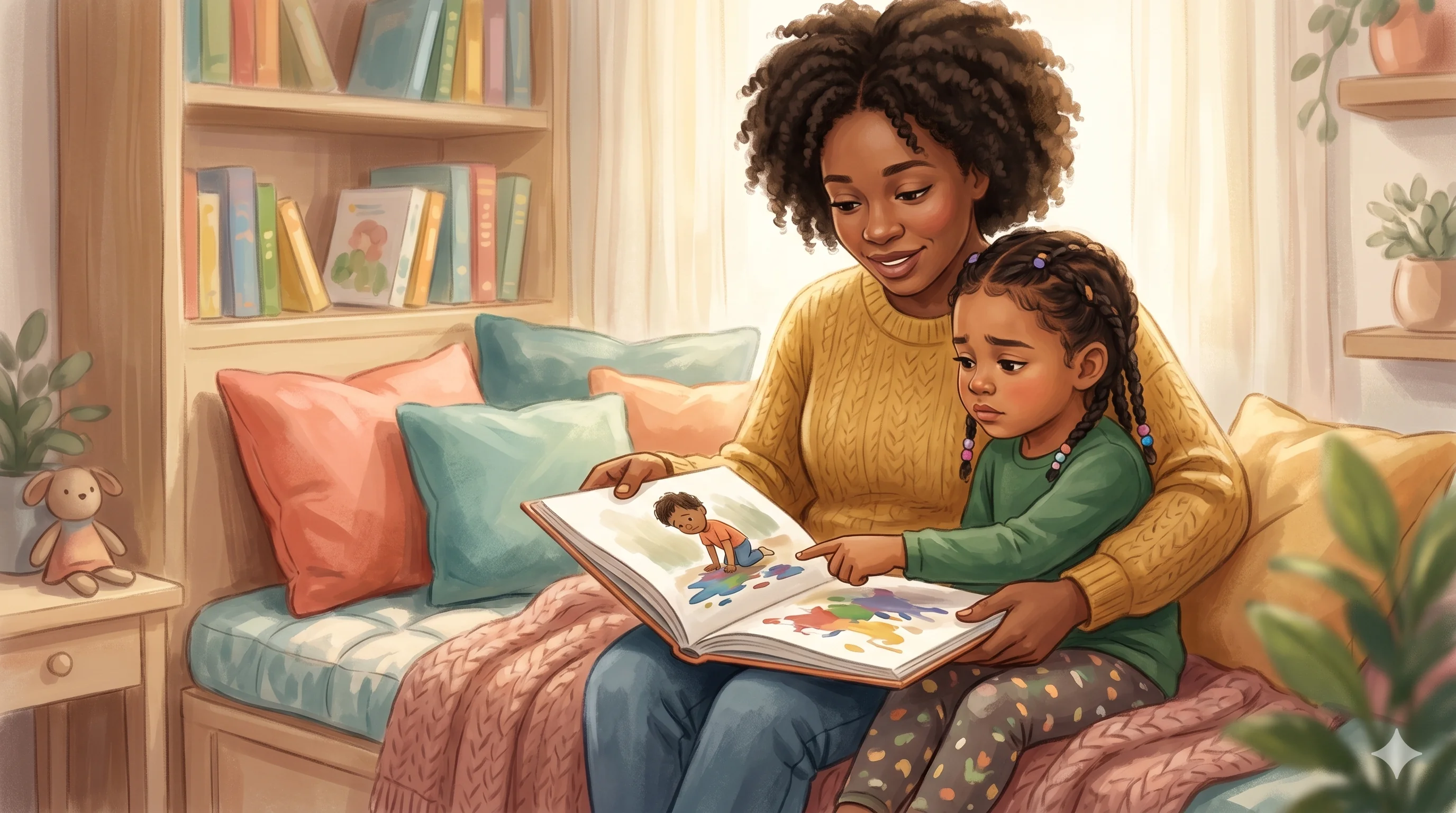
For a child, who is still actively building their emotional map, seeing these complex emotions portrayed by a character-especially a character who looks like them-is incredibly validating. It shifts the abstract, overwhelming feeling ("I am angry!") into a concrete, understandable concept ("My character felt angry when his balloon flew away.").
This ability to externalize emotion is crucial. It allows the child to feel the emotion through the story, rather than having to process it all internally while upset.
Quick Tip for Emotional Reading:
- Don't just read the words: Pause and ask, "How do you think [Character's Name] feels right now?"
- Validate first: Before suggesting a solution, name the feeling: "It looks like you are feeling really disappointed."
- Use physical cues: When you read a character being sad, slow your voice and soften your tone to help them connect sound and feeling.
💖 How Does Personalization Deepen the Emotional Lesson?
Generic stories can be helpful, but when the story is about your child, the emotional resonance skyrockets. Why? Because it triggers the psychological phenomenon of "self-reference."
When your child sees themselves-their favorite toy, their neighborhood, their specific challenge-as the hero navigating a tough feeling, the story instantly becomes deeply personal and powerful. They are not just observing a plot; they are observing a version of themselves.
This process gives them narrative agency. They learn:
- That they are the main character: Their feelings matter.
- That big feelings are manageable: They can watch their hero solve the problem.
- That they have the power to choose: The hero's resolution often comes from a choice (to ask for help, to try again, to take a deep breath).
This is significantly more impactful than reading about a fictional, unrelated child.
When your child is ready to see their own unique journey through feelings and challenges captured in a bespoke narrative, you can start designing a personalized book today.
Understanding the Emotional Spectrum
Emotional literacy isn't just about recognizing "happy" and "sad." It involves understanding the nuances:
- Disappointment: The gap between expectation and reality.
- Frustration: Being blocked from a goal or task.
- Jealousy: Feeling threatened by a comparison.
- Guilt: Feeling responsible for a negative outcome. Making the vocabulary of these moments visible in a personalized book helps build a comprehensive emotional toolkit.
🧩 Is It Better to Teach Emotions in Storybooks or Through Play?
Both are vital, but they teach different things.
- Play is where the child practices the skill (e.g., role-playing calming down after a meltdown).
- Storybooks are where the child learns the concepts and the vocabulary (e.g., learning the phrase, "I feel frustrated right now.").
The best approach is combining both. A personalized book can serve as the initial curriculum. It introduces the concepts ("Oh, look, Leo feels frustrated because his tower fell!"), which the parent and child can then translate into guided play and conversation.
For more strategies on how tailored books boost emotional growth and self-concept, check out our guide on how personalized books impact emotional development and self-confidence.
Takeaway: Connecting Stories to Real Life
- The 'Show, Don't Tell' Rule: Use the book's scenes as jumping-off points. If the book features a messy cleanup, ask, "What was the cleanup like at your house?"
- Role-Play the Resolution: After reading a conflict, role-play the character's resolution. Practice deep breaths together.
- Keep a "Feeling Chart": Keep a journal of big emotions encountered that week, and see which emotions were featured in the story.
💡 What Are the Best Story Themes for Emotional Growth?
If you are looking to build specific emotional skills into your child's story, consider themes that naturally involve conflict and resolution:
1. Overcoming a Challenge: Stories where the hero must learn a new skill (tying shoes, riding a bike, completing a puzzle) are excellent for teaching resilience and patience. 2. Fairness and Sharing: Narratives involving playtime or group activities naturally bring up themes of boundaries, disappointment, and learning to take turns. 3. Differences and Acceptance: Stories that highlight the difference between the main character and a friend help build empathy and acceptance of unique traits, serving as a wonderful foundation for building confidence.
Ultimately, the goal isn't just that your child feels better; it's that they gain a sense of mastery over their internal world.
Conclusion: A Language for the Heart
Personalized storybooks transform the vague concept of "feelings" into a clear, storyable narrative. They provide the vocabulary, the emotional map, and the safe emotional space needed for your child to understand that anger is a signal, not a monster.
By making your child the hero who experiences, names, and ultimately overcomes big emotions, you are doing more than just reading a story-you are equipping them with the most valuable tool of all: emotional intelligence.
Need a personalized story tailored to your child's current emotional journey? Creating a book is an instant way to turn complex feelings into a concrete, beautiful keepsake.