Parenting & Education
Navigating Big Life Changes in Childhood with Personalized Stories
By James Smith
Parenting is often described as a mix of magic and mystery. Sometimes, the magic is pure joy-a first tooth, a school play, or a perfect summer day. And sometimes, the mystery arrives in the form of a major life change.
Whether your child is moving to a new neighborhood, starting primary school, experiencing a family adjustment, or grieving a loss, these moments, while inevitable, can feel enormous and unpredictable to a child. Suddenly, the comforting map of their daily routine-the predictable rhythm of life-gets redrawn.
It is completely normal for children to feel anxiety, confusion, or even sadness when facing transitions. But how do you help a little one process something so big that it feels bigger than their vocabulary?
The answer, often found in the oldest and most powerful of human tools, is storytelling. And when that story is deeply personal, the impact can be profound.
Why Do Major Life Transitions Disorient Our Children?
For a developing mind, routine equals safety. Routine is the invisible framework that lets a child predict the next turn, the next lesson, the next hug. When a major shift happens-like leaving a familiar playground for an unknown school-that predictable framework feels shaky.
Research into child psychology consistently shows that life transitions trigger heightened emotions like anxiety and loss. These aren't signs that your child is "overreacting"; they are natural responses to a perceived loss of control.
The goal, then, isn't to magically erase the change, but to give the child tools to process the feeling of the change. This is where the concept of narrative becomes incredibly useful.
The Concept of Narrative Reframing
In therapeutic circles, a core idea is that problems aren't just things happening to a child; they are narratives-stories-that the child is having about those things.
Narrative therapy encourages parents and caregivers to help the child externalize the problem. Instead of saying, "You are having trouble making friends," the dialogue shifts to, "It seems like the Challenge Monster has made starting school feel a bit intimidating lately."
By giving the scary feeling a name, a shape, or a character outside of the child, you make it manageable. You teach them: This feeling is big, but it is also a story that we can write a better ending for.
The Magic of the Story Structure
Storytelling provides more than just entertainment; it provides a cognitive container. When a child is overwhelmed by the big, amorphous blob of "I'm scared," a story gives that fear a defined beginning, middle, and end.
Here is how the structure of a good story supports emotional processing:
- Validation: The story acknowledges the difficulty ("Sometimes new things feel really big...") which validates the child's real feelings.
- Modeling Resilience: The hero of the story-whether it’s a brave character or the child themselves-faces the obstacle, uses their existing strengths, and succeeds. This teaches, through safe proxy, that resilience is possible.
- Control: By co-creating the narrative, even slightly, the child gains a sense of agency. They aren't just experiencing the change; they are actively participating in the story of adapting to it.
Pairing Storytelling with Play
For younger children, the bridge between abstract narrative and concrete reality is play. Play is not just a break; it is the primary way young children process, rehearse, and regulate complex emotions.
When a child engages in imaginative play related to a life event (like playing "store" after the parents move to a new neighborhood), they are safely running simulations. They are rehearsing the necessary social scripts: how to ask a stranger for help, how to navigate a new classroom, or how to say goodbye when a parent leaves.
These play sessions, guided by you, turn uncertainty into practice.
Why Personalized Stories Are the Ultimate Coping Tool
While reading general picture books about "friendship" or "moving" is wonderful, the most powerful narratives are those that reflect the child's actual life.
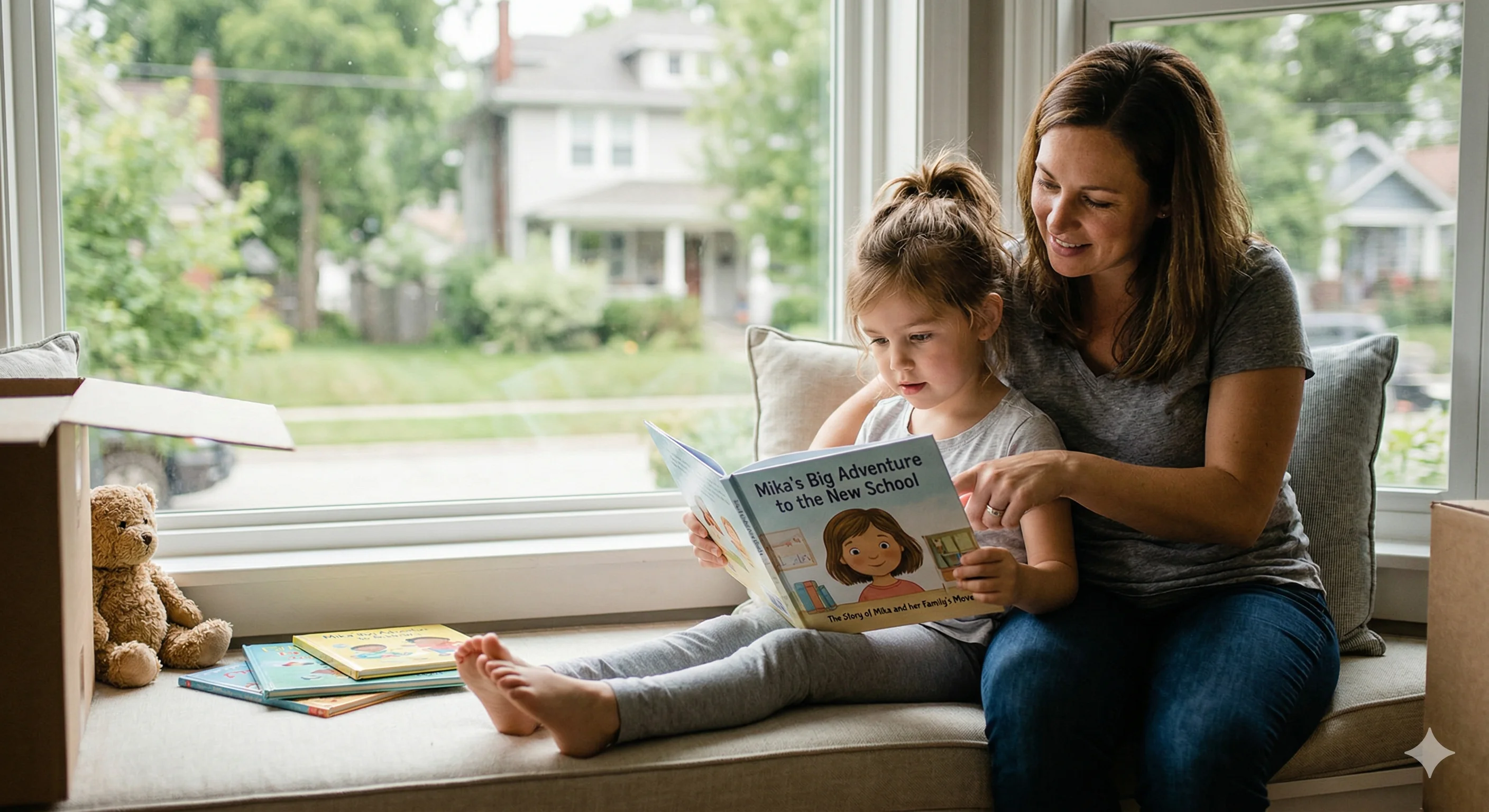
When the story feels like it was written just for them, it provides a level of validation that generalized stories simply cannot match. A general book says, "Moving is hard." A personalized book says, "Remember when you moved from Maple Street to Oak Lane, and you loved the smell of the rain on your new window?"
This direct connection makes the coping mechanism feel intrinsically tied to their unique identity and their history.
This is where personalized children’s books shine. By incorporating details-the name of the new school, the unique look of their pet, the specific activity they are excited about-the story anchors the overwhelming change in the reality of their own life. It says, "You are brave, and this specific, unique thing that is happening to you can be navigated."
These tailored tales act as a tangible ritual. Reading the book before a big day isn't just reading; it’s a bonding moment that reinforces that the child is seen, understood, and that the safety net of their family narrative remains unbroken.
Beyond the Book: Creating a Supportive Environment
Remember that storytelling is a complement, not a replacement, for consistent caregiving. As you help your child write, read, and play through these big moments, keep these supportive practices in mind:
- Talk It Out Often: Don't wait for a crisis. During calm moments, ask open-ended questions about the change: "What part of the new schedule are you most curious about?"
- Establish Transitional Objects: Whether it’s a specific stuffed animal, a comforting blanket, or a special photo, having a physical object that represents continuity can be grounding.
- Use Rituals: Create small, repeatable rituals to mark the transition. Maybe it’s reading the same three bedtime stories every night for a month, no matter where you are. Rituals are anchors for the soul.
When life throws its big, unpredictable curveballs, the most valuable thing you can give your child is the gift of a narrative structure-a map they can refer back to when they feel lost. Using personalized stories allows them to step into the hero role, not just in the book, but in their own life story.
The journey through big life changes is messy, emotional, and profoundly human. By recognizing storytelling as an active tool for emotional work, you are giving your child not just a book, but a powerful framework for understanding their own resilience.
How can a personalized story anchor your child during their next big adventure? Consider creating a book that centers their unique experience, turning potential anxiety into a celebration of their personal strength.