Parenting
Navigating Childhood Mental Health with Personalized Stories: A Parent's Guide
By Robert Williams
Navigating Childhood Mental Health with Personalized Stories: A Parent's Guide
The air feels thicker than usual. You know it. It's that unique, unsettling tension that washes over everything right before a big change. Maybe it's the first day of primary school, the move to a new neighborhood, or perhaps it's just a huge family event that radically changes the routine. For parents, the shift can feel overwhelming-managing the logistics, the emotion, the sheer weight of trying to keep everyone grounded.
And then there are the kids.
For a child, these big life transitions don't just change where they live or who they spend time with; they change their sense of security. When routine breaks down, feelings-excitement, frustration, anxiety-can bubble up, becoming huge, physical forces. We call these "big feelings," and while they are perfectly normal, they can feel enormous and confusing for a little mind.
As parents, we often feel unprepared to navigate these complex emotional landscapes. What do we do when a child is struggling with anxiety about moving, or processing the big emotion of a family change?
The answer, we've found, often lies not in logic, but in narrative. And specifically, in personalized stories.
Why Do Big Feelings Require a Story?
The human brain is wired for narrative. From the moment we learn to speak, we use stories to understand the world. When we are faced with something unpredictable-like a move, a new sibling, or even just a challenging day at school-our brain seeks predictability.
A good story provides structure. It gives a narrative beginning, middle, and end, a conflict, and a resolution. These elements don't just entertain; they model emotional processing.
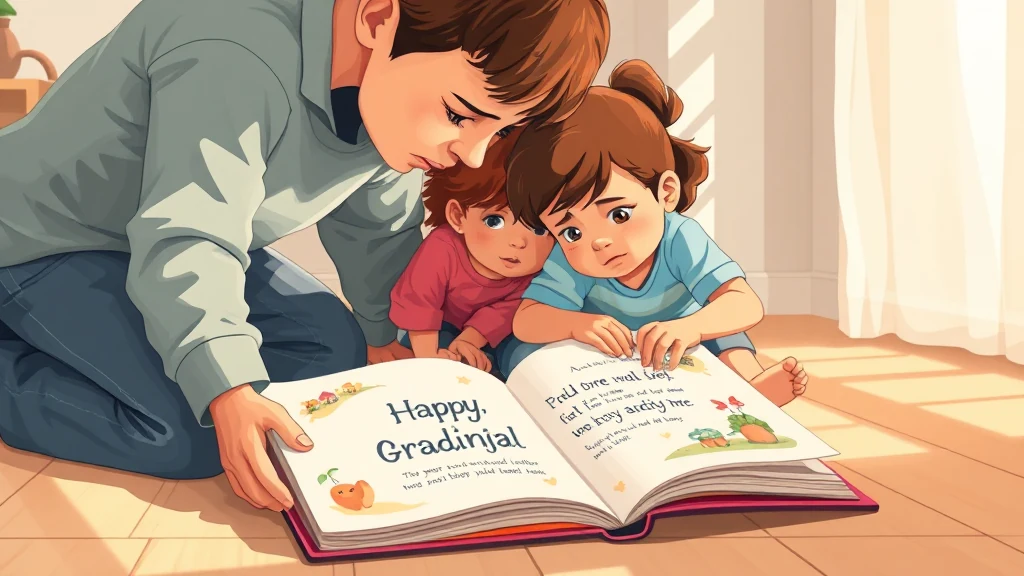
When we read a book together, we aren't just absorbing words; we are practicing emotional intelligence. We see a character feel scared, and we talk about it. We see a character overcome a fear, and we talk about the feeling of relief. This externalizing of emotion is incredibly powerful. It teaches the child that big, scary feelings are manageable, because other people-and characters-have felt them, too.
The Power of Personalization: Making the Child the Hero
Reading a general story helps, but nothing is as uniquely validating as seeing oneself featured.
When a child sees themselves as the main hero-the one solving the problem, the one overcoming the challenge-it triggers a profound psychological response. It shifts the feeling from, "This huge anxiety is too much for me," to "I have the inner strength to handle this."
This isn't about vanity; it's about narrative agency. By starring in the story, the child is placed in a position of power and capability. They are the one who learns to ask for help, the one who shows courage, and the one who restores order to their world.
Because the personalized narrative is built around their life, their fears, or their unique experiences, the book feels less like fiction and more like a blueprint for coping. This process of mapping out the big feelings in a safe, beautiful story can be deeply reassuring.
If you're looking to explore how to give your child the ultimate sense of control and validation during a moment of transition, you can start crafting a personalized storybook for them.
How Can Stories Help Process Difficult Life Transitions?
Whether your family is going through a blended family phase, a move across states, or the shift of starting primary school, the uncertainty itself can be anxiety-inducing.
Personalized stories act as a "safe practice ground" for these moments. Instead of facing the overwhelming reality head-on, the child can navigate a story where the rules are clear, the feelings are spoken out loud, and the resolution is positive.
For instance, if you are moving, a personalized book can frame the move not as a loss, but as a great adventure-a quest to discover a new kind of magic in a new neighborhood. The book can help define what "home" means: is it the house, or is it the feeling of the people inside it? This kind of open conversation, anchored in a shared story, builds emotional resilience.
For more ideas on turning big changes into comforting narratives, check out our guide on personalized-books-for-milestone-life-events-deep-dive.
Quick Tip: Storytelling for Anxiety
- Acknowledge the feeling first: Don't dismiss the anxiety. "I know this move feels huge and scary."
- Externalize the feeling: Instead of saying, "Stop worrying," try, "The worrying feeling feels like a big, thick fog." This gives it shape.
- Identify the hero: In your storytime, make sure the child is the proactive problem-solver, not just the recipient of comfort.
Beyond the Pages: Building Emotional Vocabulary
Anxiety often thrives in the ambiguity of "big feelings." If a child can't name what they feel (is it frustration? disappointment? fear?), it's hard for them to process it.
Personalized stories are masterful tools for vocabulary building. They don't just say, "She felt sad"; they provide context and describe the physical manifestation of that sadness-a downturned mouth, shoulders drooping, a heavy stomach feeling.
By associating a feeling word with a concrete visual (a character's face, a drawn situation), the story gives the child the tool they need: a word for the feeling. This immediately reduces some of the intensity of the feeling itself, giving the parent and child a shared language to work with.
This deep dive into emotional processing is key. If you're dedicated to building your child's emotional literacy, exploring resources like caring-for-childs-emotional-health-through-personalized-stories can offer actionable strategies.
Quick Tip: Making Book Time Meaningful
- Pause and Predict: When reading, pause before the moment of high emotion. "I wonder what Character X will do now?" This makes prediction a shared, engaging activity.
- Ask 'How' questions: Instead of "Are you sad?", ask "How does sadness feel in your body?" This directs them to physical sensation, which is easier to identify.
- Use dramatic voices: Over-exaggerate the tone and character voices when discussing big feelings to make them feel less threatening.
Final Thoughts: When the Book Closes
Some parents worry that focusing so much on anxiety or difficult topics might make the book feel too heavy. But remember, this isn't about treating a diagnosis; it's about equipping a child with emotional tools-the same tools we use to manage a difficult school day or a challenging sibling rivalry.
Personalized stories are not just comfort items; they are proactive developmental resources. They teach the child that big emotions are valid, but they are also temporary, and they are manageable.
By placing your child at the center of the narrative of their own life, you aren't just creating a storybook; you are building a deep, internal source of emotional strength and confidence.
What's your biggest struggle? It doesn't have to be solved today. For thoughtful, engaging ways to bring confidence and comfort back into your family routine, you can create a personalized book for your child.