Parenting & Education
Navigating the Transition to Primary School with Personalized Stories
By Elizabeth Davis
The journey into primary school is a monumental milestone-a thrilling new chapter filled with vibrant colors, new friends, and the promise of endless learning. For parents, it’s a mix of pride and anticipation. For children, however, it can feel much bigger, much louder, and sometimes, quite overwhelming.
If your child is starting school soon, you are likely aware of the buzz around "readiness." But what does readiness really mean? It’s rarely just about knowing their ABCs. More often, it involves a complex cocktail of emotional preparedness, routine adaptation, and a sense of self-efficacy.
If the thought of backpacks, new classrooms, and saying goodbye to familiar comforts brings even a little bit of nervousness, please know you are not alone. This guide is for you-the supportive, insightful parent-as we explore strategies, drawing from developmental psychology and creative play, to help your little one walk into that new school year with confidence, not just curiosity.
Understanding the Big Feelings: What Makes Transitions Hard?
It is perfectly normal for children to experience a range of big feelings when facing a major change. They might feel excitement ("Yay! I get to learn!"), mixed with sadness ("I’ll miss my cozy corner at home") or mild anxiety ("What if I get lost?").
Developmental experts confirm that transitions are normal hurdles. The key isn't to eliminate the nerves-that’s impossible-but rather to validate them.
1. The Power of Emotional Coaching
Emotional coaching is less about giving answers and more about naming feelings. When your child expresses worry, resist the urge to immediately dismiss it with, "Don't worry, it will be fine." Instead, try this approach:
- Acknowledge: "It sounds like you feel really nervous about meeting so many new people."
- Validate: "It's okay to feel nervous. Big changes are big."
- Normalize: "Almost every kid feels a mix of excitement and nerves before starting something new."
By talking through the feelings before they happen, you are helping your child build crucial emotional vocabulary and the inherent ability to self-regulate when things get overwhelming.
2. Predictability Builds Confidence
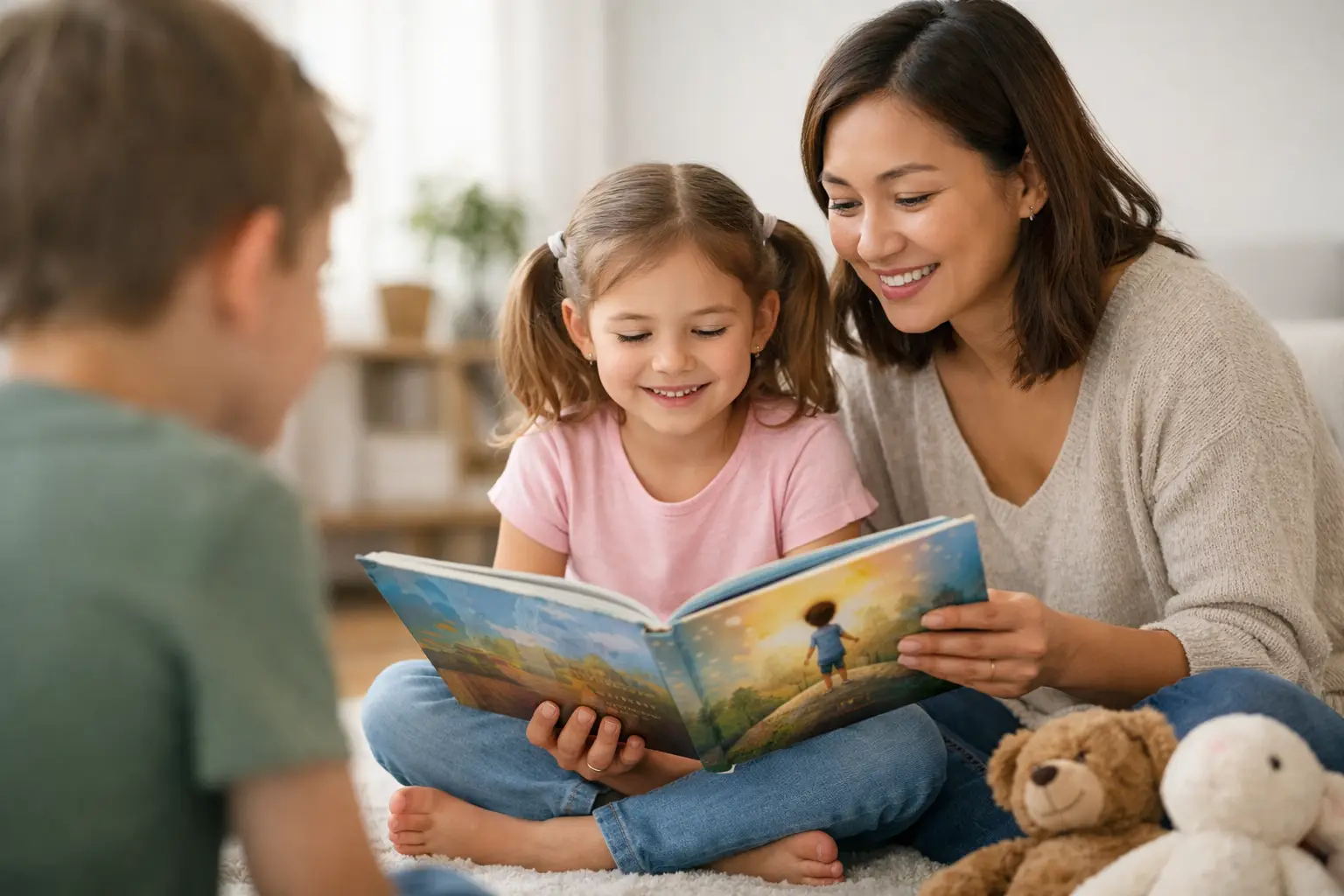
Young children thrive on routine. The sudden shift to a structured environment where routines are set by others can feel unsettling. Incorporating predictable, calming rituals into the evening routine-like reading a specific, cherished story together-reminds them that while the setting is changing, the love and the comfort at home remain constant.
From Playroom to Classroom: Rehearsing Success Through Imagination
How can we help our children mentally "practice" being successful students without actually going into a classroom? The answer lies in narrative play and the magic of stories.
Imaginative Play as a Rehearsal Space
Research into play shows that imaginative scenarios allow children to safely act out new roles. When a child plays 'school,' they are not just mimicking; they are problem-solving in a low-stakes environment. They are negotiating turns, practicing asking permission, and managing frustration-all core social skills that underpin academic readiness.
If you find yourself needing prompts for these imaginative games, look for scenarios that mimic school life:
- Role-Play Lining Up: Pretend the family is walking to the corner store and must line up correctly.
- Sharing Materials: Use blocks or toys and practice taking turns and asking, "May I have a turn with that?"
- Asking Questions: Set up a 'pretend science station' and encourage them to ask, "How does this work?"
Turning Abstract Fears into Concrete Heroes
This brings us to the incredible power of personalized storytelling. Sometimes, the abstract concept of "Primary School" is too big for a child's imagination to handle. They can't visualize themselves succeeding in it yet.
Personalized books bridge this gap perfectly. When the story centers on your child-with their actual name, favorite pet, and maybe even a representation of their best friend-it instantly makes the overwhelming concept of "school" concrete and manageable.
Imagine reading a story where your child, the hero, encounters a new classroom. In that book, they are the one who asks a thoughtful question, they are the one who makes a new friend over a shared interest, and they successfully master the art of lining up.
This isn't just reading; it's a safe rehearsal. The child sees a narrative blueprint of success rooted in their own identity. It boosts self-efficacy-the belief in their own ability to succeed-in a way that no general picture book can match.
Beyond Academics: What True School Readiness Looks Like
When experts talk about "readiness," they are often referring to the whole child. While knowing the alphabet is wonderful, the most critical skills to foster right now are:
- Curiosity: A genuine "Why?" spirit.
- Self-Regulation: The ability to wait, take a deep breath, or ask for a break.
- Social Competence: Understanding and responding to others' emotions.
How can customized stories weave these skills in?
By incorporating the child’s personal interests, the narrative becomes an adventure they want to take. If your child loves dinosaurs, a story about meeting a friendly, gentle T-Rex on the first day of school taps directly into their existing passion, making the learning context feel less like 'work' and more like a grand expedition.
These personalized adventures ensure that the story feels mine, not just a story, deepening the emotional connection and solidifying the positive takeaways.
Building a Foundation of Joy and Trust
Preparing for primary school is a marathon, not a sprint. There will be days when things feel exciting, and days when they feel like a huge, uncertain leap.
The foundation of confidence doesn't come from knowing all the answers; it comes from knowing that no matter what happens, you are a safe source of love and understanding.
This year, integrate storytelling into your prep routine. Don't just read about school; create stories about your child conquering school moments. Watch them repeat the successful actions-the big hug goodbye, the triumphant moment they found the perfect spot at the table, the question they asked the teacher.
If you are looking for a tangible, heartfelt way to ease those transition jitters and build up your child's self-belief system, consider creating a personalized book about starting school. You can turn abstract anxiety into a beautifully illustrated, believable, and successful narrative arc, making the unknown feel wonderfully known.
What small moments of connection-a silly song, a special ritual, or a powerful story-can you share with your child this week to build confidence for whatever adventure lies ahead?