Parenting & Education
Fun Play Ideas: Using Personalized Storybooks in Early Childhood Play
By David Miller
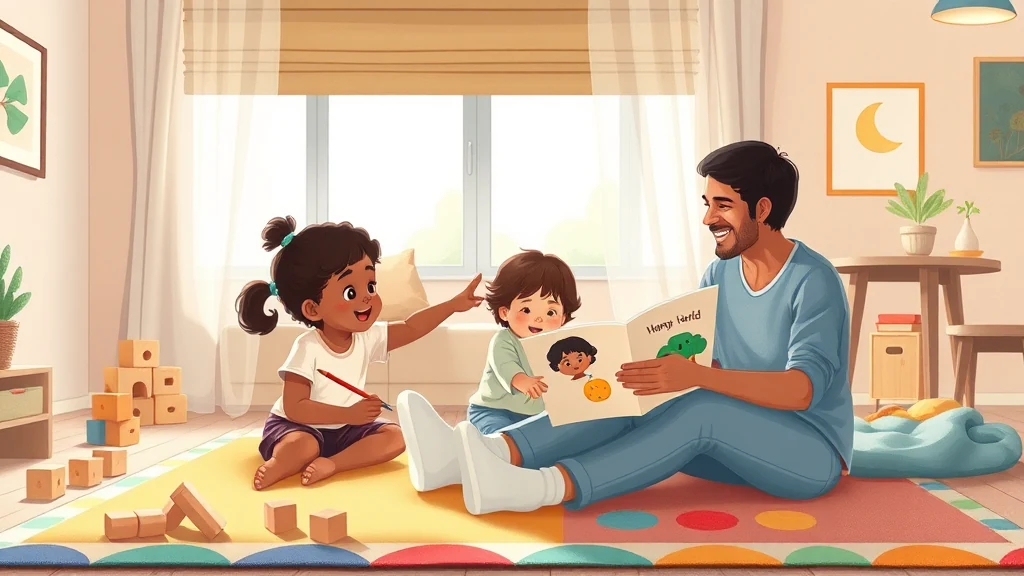
As parents, we naturally want the best for our children-we want their minds to flourish, their imaginations to soar, and their language skills to develop robustly. We often spend hours orchestrating educational activities, from flashcard drills to complex building blocks. But what if the most powerful learning tool wasn't a curriculum, but the joyful, messy, wonderful act of play itself?
For many caregivers, unstructured time can feel overwhelming. You might look at a book and wonder: How do I take this story and weave it into something tangible, something that keeps the fun alive long after we read the last page?
The secret lies in treating storybooks not just as reading materials, but as powerful launchpads for creative play. When you personalize a story so deeply that your child is the undeniable hero, that book becomes an anchor, grounding boundless imagination in a tangible, deeply personal reality.
Why Is Play the Ultimate Learning Tool?
Before we dive into specific games, it’s vital to understand why play is so critical during the early years. It is far more than just fun; it is the primary mechanism through which the human brain builds knowledge, practices social skills, and develops executive function.
Cognitive theorists have long emphasized that play is not just a break from learning; it is the learning.
- Developing Emotional Intelligence: When a child plays "house" or "doctor," they aren't just stacking blocks; they are rehearsing social roles. They learn empathy, how to manage disappointment, and how to navigate complex relationships-all vital components of emotional intelligence.
- Mastering Problem-Solving: Play forces children to adapt. A block tower falls? How do we fix it? A pretend kitchen is missing an ingredient? Where can we find a substitute? These small, manageable failures are the safest training grounds for resilience and practical problem-solving.
- Building Language Schemas: During imaginative play, language acquisition accelerates rapidly. Children predict what comes next, retell parts of the story, and invent vocabulary specific to their dramatic scenario. They are active constructors of language.
Personalized Stories: From Page to Play Prototype
While any book can inspire play, a personalized book offers a unique advantage. When your child sees themselves-their specific laugh, their unique journey-captured as the hero, the narrative shifts from something external to something intensely internal. They are not just playing a character; they are living out a version of themselves.
This deep sense of ownership fuels engagement. The play becomes goal-directed: "We have to build a safe castle for [Child's Name] character," or "We need to make sure [Child's Name] finds the lost puppy." The book gives the 'why,' and the child provides the ingenious 'how.'
🚀 Actionable Play Scenarios: Integrating the Book
Here are three research-backed, low-prep play ideas designed to take your personalized storybook beyond the armchair and into the playroom.
1. The Character Role-Play Deep Dive
If your book features your child meeting a favorite animal or interacting with a profession (like a firefighter or a scientist), use that interaction as the core script.
The Setup: Identify two or three key roles from the story (e.g., the protagonist, the villain, the supportive mentor). Gather minimal props-a blanket for a cave, a colander for a kitchen, or a cape.
The Play: Encourage dramatic improvisation. Don't guide the dialogue; instead, guide the emotion. "When [Child's Character] felt scared in the dark forest, how did they feel? Show me that feeling." This helps them process the character's emotional arc, strengthening emotional vocabulary and understanding social nuance.
2. Setting Construction: Building the World
This technique translates the book's setting into a 3D, manipulable environment. If the story takes place in a magical orchard, the living room becomes the orchard.
The Setup: Look at the map or main backdrop of your personalized book. What elements are key? Trees? A bustling market? A secret garden? Collect natural items (leaves, twigs) or simple household items (cardboard boxes, pillows).
The Play: Work together to build a physical model of the world. As you build, talk through the plot points in relation to the architecture. "If [Character] needs to cross the wobbly bridge to reach the bakery, what materials should we use to make it stable?" This links spatial reasoning (geometry, physics) directly to the narrative plot.
3. Story Mapping and Sequencing Play
This is perfect for older preschoolers who enjoy narrative structure but need movement. It turns passive reading into active recall.
The Setup: Print out 5-8 key images or pivotal moments from the book-not just random pictures, but major scene changes. These are your "story cards."
The Play: Mix the cards up and challenge your child to put the events back in the correct order. You can add a layer by requiring them to act out the moment when they place the card. The final goal-directed play is to reconstruct the emotional journey of the hero.
Beyond the Fun: Why Personalization Matters
Ultimately, these play ideas work best when the child feels the narrative is about them. This is where the depth of a personalized storybook shines.
When your child reads, "Because you are kind, the lost bear found its way home," the entire play session carries an intrinsic, loving resonance that generalized characters cannot provide. It builds self-esteem and a sense of agency in their world, making them more willing to test boundaries and engage with complex ideas during play.
It’s a powerful combination: the imaginative scaffold of play meeting the deep, personal validation of a story built just for them.
Play isn't just a way to pass the time; it's the work of childhood. By using the narrative magic of a personalized book, you are giving your child more than just entertainment-you are giving them a fully realized, multi-sensory training ground for empathy, critical thought, and confidence.
Thinking about the perfect story that will inspire months of joyful, imaginative play? Consider crafting one today. Creating a personalized book that spotlights your child's unique personality and interests is a wonderful way to gift them the ultimate play prompt.