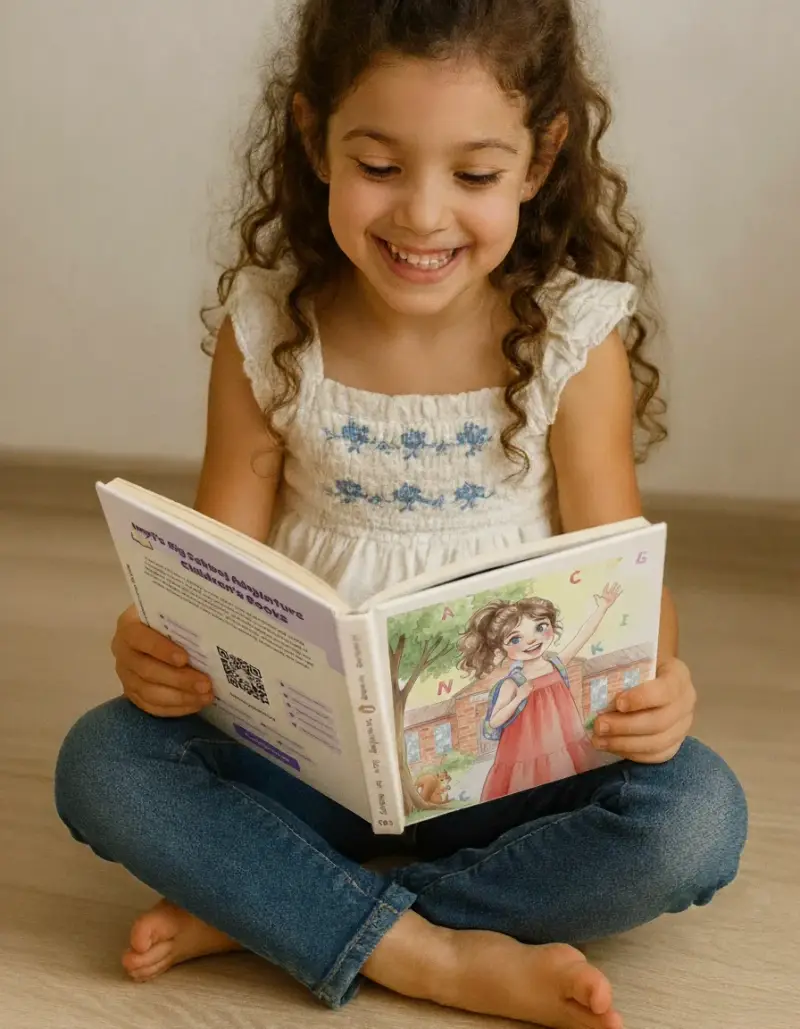
Key insight 1
Anger is a normal, healthy emotion that all children experience, but learning to manage anger constructively is a crucial developmental skill that impacts social relationships, academic success, and emotional well-being. When children struggle with anger management, it can lead to externalizing behaviors, social difficulties, and long-term emotional regulation challenges. Research from child psychology and bibliotherapy demonstrates that personalized stories featuring the child as the main character offer a powerful, evidence-based approach to teaching children healthy anger management and emotional regulation skills.
A systematic review published in the Journal of School Psychology examined the effectiveness of creative bibliotherapy for children aged 5-16 with emotional and behavioral challenges. The research found that children who read personalized stories addressing anger and emotional regulation showed small to moderate positive effects on externalizing behaviors, including aggression and anger-related conduct problems. The study attributed these improvements to what psychologists call "emotional identification and insight" - when children see themselves (as the character) experiencing anger and learning to manage it constructively, they develop greater self-awareness and emotional regulation skills.
Key insight 2
The power of personalization in anger management books extends beyond simple character naming. Research from Harvard's Center on the Developing Child demonstrates that personalized narratives activate the same brain regions involved in emotional regulation, creating what neuroscientists term "mental rehearsal" for emotional control. When a child reads about themselves recognizing anger, using calming strategies, or solving problems constructively, their brain processes this as a real experience, strengthening neural pathways for emotional regulation and impulse control.
One of the most compelling aspects of personalized anger management books is their ability to combine emotional education with practical skill-building. A study from the Journal of Child Psychology found that when children learn about emotions, anger triggers, and coping strategies through personalized stories, they develop both emotional awareness and behavioral skills. The research showed that children who understood their emotions and had concrete strategies for managing anger demonstrated 40% fewer aggressive behaviors and 50% better emotional regulation in social situations.
Key insight 3
The timing and method of exposure through personalized stories prove crucial for maximum effectiveness. Research indicates that optimal impact occurs when children are exposed to personalized anger management books proactively, before anger becomes a significant problem, and reactively, when children are struggling with anger management. Studies show that children who learn emotional regulation skills through stories demonstrate better anger management both immediately and at follow-up assessments, with improvements maintained over time.
Personalized books also address the critical need for emotional vocabulary and awareness in children's development. Research from child psychology demonstrates that children who can identify and label their emotions show better emotional regulation and fewer behavioral problems. Personalized books create opportunities for children to learn emotional vocabulary, recognize physical signs of anger (racing heart, tense muscles, hot face), and understand the connection between thoughts, feelings, and behaviors. This emotional awareness is foundational for effective anger management.
Key insight 4
The benefits extend beyond the individual child to the entire family system. Research shows that when parents read personalized anger management books with their children, it creates opportunities for meaningful conversations about emotions, anger triggers, and coping strategies. These conversations strengthen parent-child bonds while providing children with emotional support and validation. Studies indicate that children whose parents engage in interactive reading of personalized emotional regulation books show improved communication skills, better emotional expression, and stronger family relationships.
Furthermore, personalized anger management books serve as "emotional tools" - psychological resources that help children bridge the gap between feeling angry and responding constructively. Research from emotion regulation theory demonstrates that having concrete strategies and tools reduces the likelihood of aggressive or destructive responses to anger. When a personalized book includes specific coping strategies (deep breathing, counting, taking a break, problem-solving), it becomes a portable resource that children can reference when feeling angry.
Key insight 5
Research also highlights the importance of including problem-solving and conflict resolution in personalized anger management books. A study from the Journal of Child Psychology found that children who learned problem-solving skills through personalized stories showed significantly better anger management and conflict resolution abilities. The research demonstrated that understanding how to identify problems, generate solutions, and choose constructive responses helps children see anger as a signal that something needs attention, rather than an emotion that requires immediate aggressive action.
For children with more significant anger management challenges, personalized books can be especially valuable when combined with other interventions. Research shows that bibliotherapy works best as part of a comprehensive approach that may include parent coaching, school-based social-emotional learning programs, and professional support when needed. The personalized book serves as a valuable tool in this comprehensive approach, providing consistent messaging, skill-building opportunities, and emotional support that reinforces other interventions.
Key insight 6
The research evidence overwhelmingly supports the use of personalized books for teaching children anger management and emotional regulation. These books combine multiple evidence-based techniques including cognitive behavioral therapy principles, emotion coaching, problem-solving training, and narrative therapy. The result is a comprehensive tool that addresses not just anger management itself, but the underlying emotional awareness, cognitive patterns, and behavioral skills needed for long-term emotional regulation. For families seeking evidence-based approaches to support their children's emotional development, personalized books represent a powerful, research-backed solution that transforms anger challenges into opportunities for growth and emotional intelligence.