Key insight 1
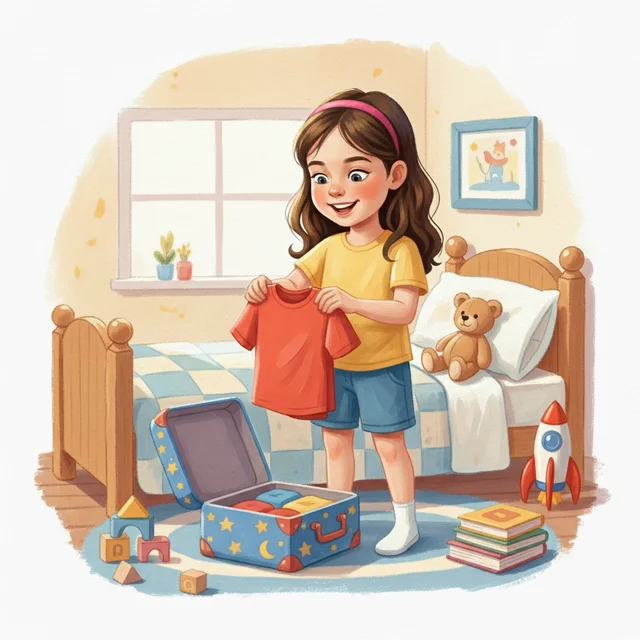
Learning to dress independently represents one of the most complex and important milestones in early childhood development. This achievement requires sophisticated coordination of fine motor skills, bilateral coordination, motor planning, and cognitive understanding. Beyond the physical skills involved, independent dressing represents a crucial step toward autonomy and self-care. Research from child development, occupational therapy, and bibliotherapy demonstrates that personalized stories featuring the child as the main character offer a powerful, evidence-based approach to supporting children through this challenging yet rewarding learning journey.
Self-dressing development research reveals important insights about the skills required for independent dressing. Self-dressing is a complex daily living skill that draws on many fine motor and biomechanical abilities. Tasks like putting on socks, handling fasteners (buttons, zippers, snaps, hooks, buckles), pulling up pants, or managing coat sleeves require coordination of both small and large muscles, bilateral coordination, wrist stability, and control of fingers/thumb (including pincer grasp) as well as motor planning. Typical developmental milestones show that around age 2, children can remove coats and take off untied shoes, by 2½–3 years they attempt socks and large buttons, around 4–5 years they achieve more independence with buckles and belt loops, and by 6–7 years they can dress fully independently.
Key insight 2
The power of personalization in dressing independence books extends beyond simple character naming. Research from child psychology demonstrates that personalized narratives activate the same brain regions involved in motor planning and skill acquisition, creating what neuroscientists term "mental rehearsal" for self-dressing skills. When a child reads about themselves learning to dress, handling fasteners, and feeling proud, their brain processes this as a real experience, strengthening neural pathways for fine motor learning and building confidence in their dressing abilities.
One of the most compelling aspects of personalized dressing independence books is their ability to combine fine motor education with independence building. Research shows that the type and variety of clothing fastenings available impact development of relevant fine motor skills. Frequent exposure to zippers, for example, correlates with better mastery of zip-fastening tasks. Personalized books can model these skills while showing children how to feel confident and independent in their dressing.
Key insight 3
The timing and method of exposure through personalized stories prove crucial for maximum effectiveness. Research indicates that optimal impact occurs when children are exposed to personalized dressing books proactively, before beginning self-dressing practice, and reactively, during the learning process. Studies show that children who prepare for self-dressing through stories demonstrate better fine motor skills, improved fastener handling, and increased confidence in dressing independently.
Personalized books also address the critical need for task sequencing in self-dressing development. Research demonstrates that self-dressing requires understanding sequences: first putting on underwear, then pants, then shirt, then fastening buttons or zippers. Personalized books can embed this task analysis within narrative structure, presenting each step as part of a story progression. This approach helps children internalize the sequence while maintaining engagement and motivation.
Key insight 4
The benefits extend beyond the individual child to the entire family system. Research shows that when parents read personalized dressing independence books with their children, it creates opportunities for meaningful conversations about independence, self-care, and growing up. These conversations strengthen parent-child bonds while providing children with emotional support and validation. Studies indicate that children whose parents engage in interactive reading of personalized self-care books show improved self-dressing skills, better fine motor development, and stronger positive associations with independent dressing.
Furthermore, personalized dressing independence books serve as "independence tools" - psychological resources that help children bridge the gap between dependence and autonomy. Research from developmental psychology demonstrates that having concrete examples and positive frameworks reduces frustration while building confidence. When a personalized book includes specific dressing techniques, fastener strategies, and positive outcomes, it becomes a portable resource that children can reference when facing dressing challenges.
Key insight 5
Research also highlights the importance of including frustration management in personalized dressing books. Studies show that learning to dress can be frustrating, especially when handling small fasteners or coordinating complex movements. Personalized books can address this by modeling persistence, normalizing frustration, and showing eventual success. This approach helps children understand that frustration is normal, manageable, and temporary.
For children with fine motor challenges or developmental differences, personalized dressing independence books can be especially valuable when combined with other interventions. Research shows that motor competency programs and play-based activities support skill acquisition. Personalized books can reinforce these strategies while building confidence and reducing frustration. The combination of appropriate motor support and personalized storytelling creates a comprehensive approach that addresses both physical and emotional needs.
Key insight 6
The research evidence supports the use of personalized books for helping children learn to dress independently, drawing on bibliotherapy research that shows stories can support skill learning, behavior change, and independence building. While direct research on personalized stories for self-dressing is still emerging, evidence from related domains (fine motor development, independence building, social narratives) suggests that personalized books can effectively support dressing independence. These books combine multiple evidence-based techniques including fine motor education, task sequencing, independence building, frustration management, and narrative therapy. The result is a comprehensive tool that addresses not just the physical skills needed for independent dressing, but the underlying confidence, emotional resilience, and positive mindset needed for successful self-dressing. For families seeking evidence-based approaches to support their children's dressing independence journey, personalized books represent a powerful, research-backed solution that transforms frustration into confidence and dependence into autonomy.