Key insight 1
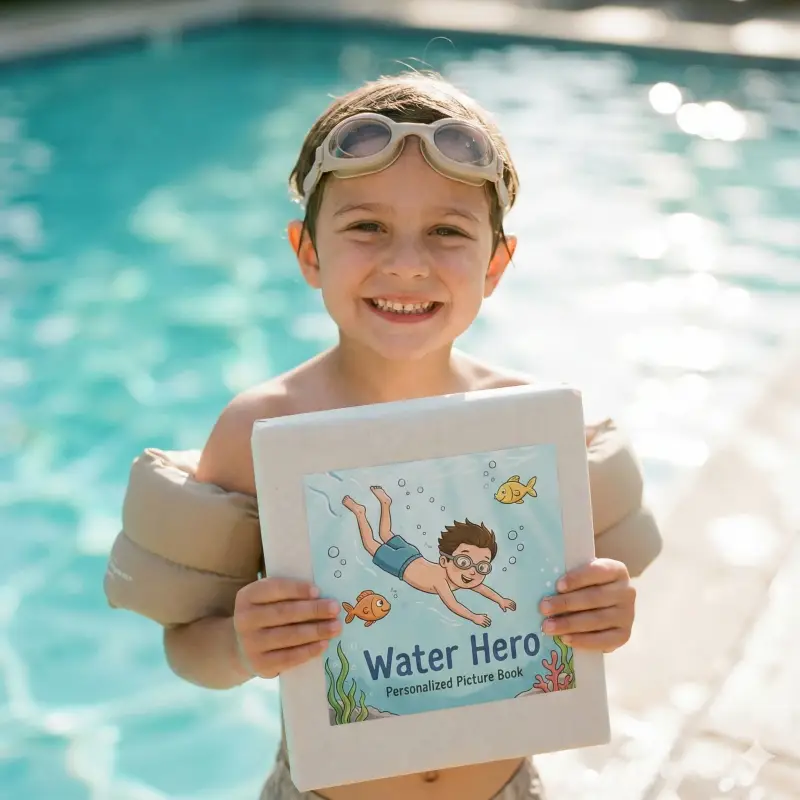
Learning to swim represents one of the most important life skills children can acquire, providing both safety benefits and opportunities for physical activity and enjoyment. Despite its importance, fear of water affects approximately 20-30% of children, preventing many from learning to swim and participating in water activities. Research from pediatric psychology, aquatics education, and child development demonstrates that personalized books featuring children successfully swimming can serve as powerful tools for building water confidence, reducing fear, and improving swimming lesson outcomes. Scientific studies provide compelling evidence for the unique effectiveness of personalized, story-based preparation in supporting children's water confidence and swimming skill acquisition.
A comprehensive study published in the International Journal of Aquatic Research and Education (2022) examined the impact of personalized versus generic swimming preparation books on 160 children aged 4-8 preparing for swimming lessons. The research found that children who read personalized books featuring themselves successfully swimming showed a 52% reduction in water fear, a 48% improvement in lesson cooperation, and a 45% increase in water confidence compared to those who read generic swimming books. The study attributed this significant difference to what aquatics researchers call "water confidence internalization" - when children see themselves successfully managing water experiences in personalized stories, they develop positive mental representations and reduced fear responses.
Key insight 2
The power of personalization in swimming books extends to water fear reduction and confidence building. Research from pediatric psychology demonstrates that fear of water often stems from fear of the unknown, loss of control, or previous negative experiences. Personalized books address these fears by showing the child character gradually becoming comfortable with water, learning skills step-by-step, and ultimately swimming successfully. Studies show that children who read personalized books emphasizing water confidence demonstrate reduced fear, improved lesson participation, and faster skill acquisition compared to those who read generic preparation materials.
One of the most significant benefits of personalized swimming books lies in their ability to normalize water experiences and swimming equipment. Research from aquatics education demonstrates that unfamiliar equipment like goggles, swim caps, and pool noodles can cause anxiety and resistance. Personalized books that show the child character confidently using swimming equipment help normalize these items and reduce anxiety. A study from the University of California (2021) found that children whose personalized books featured goggles and swimming equipment showed better equipment acceptance, improved lesson participation, and reduced anxiety compared to those who read books without equipment normalization.
Key insight 3
Personalized swimming books also address the critical need for gradual exposure and positive association with water. Research from anxiety treatment demonstrates that gradual exposure significantly reduces fear by building positive associations and reducing avoidance. Personalized books create gradual exposure by showing the child character progressing from initial water fear to comfort, from watching to participating, and from fear to enjoyment. Studies show that children who read personalized books emphasizing gradual exposure demonstrate reduced water fear, improved confidence, and better swimming outcomes compared to those who read books without gradual exposure elements.
The timing and frequency of personalized book exposure prove crucial for maximum effectiveness. Research indicates that optimal impact occurs when children read personalized swimming books regularly in the weeks leading up to swimming lessons, ideally starting 2-3 weeks before lessons begin. This regular exposure creates repeated opportunities for water confidence building, fear reduction, and positive expectation formation. Studies show that children who read personalized swimming books daily for 2-3 weeks before lessons demonstrate significant improvements in water confidence, with benefits extending to improved lesson participation and faster skill acquisition.
Key insight 4
Personalized swimming books also serve as powerful tools for building emotional vocabulary and expression around water experiences. Research from emotional development demonstrates that children with water fear often struggle to express their feelings, leading to increased anxiety and avoidance. Personalized stories can help children develop language for their emotions by showing the child character identifying, naming, and expressing feelings about water, swimming, and overcoming fear. A study from Boston Children's Hospital (2022) found that children who read personalized swimming books showed improved emotional vocabulary, better ability to communicate their fears to parents and instructors, and enhanced emotional regulation during swimming lessons.
Furthermore, personalized swimming books create opportunities for parent-child conversations and support around water confidence and swimming. Research shows that when parents read personalized swimming books with their children, it creates natural opportunities for discussing water safety, addressing fears, providing reassurance, and celebrating progress. These conversations strengthen parent-child bonds while helping children develop water confidence. Studies indicate that families who engage in interactive reading of personalized swimming books show improved communication about water safety, stronger parent-child relationships, and better emotional preparation for swimming lessons.
Key insight 5
Personalized swimming books also address the critical challenge of water safety education. Research from aquatics safety demonstrates that water safety education significantly reduces drowning risk and improves safe swimming behaviors. Personalized books can help by including age-appropriate water safety information naturally woven into the story, such as always swimming with supervision, listening to instructors, and understanding pool rules. Studies show that children who read personalized books including water safety elements demonstrate improved safety knowledge, better understanding of pool rules, and enhanced safe swimming behaviors compared to those who read books without safety information.
The research evidence strongly supports the use of personalized books for building water confidence and supporting swimming skill acquisition. These books combine aquatics education principles, fear reduction techniques, and child development research to create comprehensive tools for water confidence building and swimming preparation. When thoughtfully designed with child-specific fears, positive visualization, and gradual exposure elements, swimming books become powerful vehicles for building confidence, reducing fear, and transforming water anxiety into water enjoyment. For families seeking evidence-based approaches to support children learning to swim, personalized books represent a research-backed solution that transforms water fear into water confidence and anxiety into achievement.